
How to Identify Orangeburg Pipe
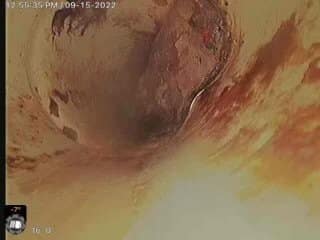
Identifying Orangeburg pipe isn’t something you can do by looking at your drains or cleanout. It’s a buried sewer line material, and the only way to confirm it is with a camera inspection. That said, there are several indicators that can raise or lower your suspicion before you get one — and knowing what to look for helps you act before a failure turns into an emergency.
Start With the Age of Your Home
The single most useful indicator is your home’s construction date. Orangeburg pipe was used almost exclusively between 1945 and 1972. If your home was built during those years, there’s a meaningful chance it has Orangeburg sewer lines — especially if it’s in a neighborhood that developed rapidly during the postwar housing boom.
If your home was built before 1945, it most likely has clay pipe. If it was built after 1972, it almost certainly has PVC. The Orangeburg window is specific.
Check Your Building Records
Some jurisdictions have building permits or inspection records that specify pipe materials. In Northern Virginia, Fairfax County, Arlington County, and Alexandria all maintain permit records. These won’t always identify the sewer line material specifically, but they can confirm the construction date and sometimes the contractor or builder — information that helps narrow things down.
If you’re buying a home and the inspection report or disclosure documents mention “original sewer line” for a pre-1972 house, that’s worth flagging.
Look for a Cleanout in Your Yard or Basement
If your home has an accessible sewer cleanout — typically a 4-inch pipe cap in the yard or basement — you can sometimes get a look at the pipe material at that access point. Orangeburg pipe is dark (nearly black), has a rough or slightly layered texture on the cut edge, and is lightweight. It won’t clang like cast iron or flex like PVC.
Be aware that many repairs over the years may have introduced different pipe sections. Even if the visible cleanout connection is PVC, the line buried in the yard could still be Orangeburg.
Physical Characteristics of Orangeburg Pipe
If you or a plumber can see the pipe directly (at an exposed cleanout, in an open excavation, or via camera), here’s what Orangeburg looks like:
- Color: Dark brown to black
- Texture: Slightly rough, layered cross-section (like compressed cardboard)
- Sound: Dull thud when tapped — not hollow like PVC, not metallic like cast iron
- Weight: Surprisingly light for its diameter
- Shape: May have already deformed from round to oval in deteriorated sections
- Walls: May feel soft, spongy, or crumbly if advanced deterioration has set in
Symptoms That Suggest a Failing Sewer Line
These symptoms don’t confirm Orangeburg on their own, but in a pre-1972 home they’re worth investigating:
- Slow drains throughout the house — not just one fixture
- Recurring backups that come back shortly after being cleared
- Gurgling sounds from toilets or floor drains
- Wet patches, soft ground, or depressions in the yard along the sewer line route
- Unusually lush or green grass in a stripe across the yard
- Sewage odor in the yard, basement, or around floor drains
The Only Definitive Test: Sewer Camera Inspection
A sewer camera inspection is the only way to confirm Orangeburg pipe with certainty. A camera is run through the line from a cleanout access point. The footage shows the pipe material, interior condition, any deformation, root intrusion, and blockages in real time.
What the camera can tell you:
- Whether the pipe is Orangeburg, clay, cast iron, or PVC
- Whether it’s still round or has begun to deform into an oval shape
- Whether there are cracks, separations, root intrusions, or partial collapses
- How much (if any) useful service life the pipe still has
Quality Sewer & Drain provides free camera inspections when an existing cleanout is accessible. If there’s no cleanout, we can discuss options — pulling a toilet or installing a cleanout — but those involve additional cost.
Schedule Your Free Inspection
If your home was built before 1972 and you haven’t had a camera inspection, it’s worth doing — even if you’re not having problems yet. Orangeburg that’s deforming but still draining gives you time to plan a replacement on your terms. Orangeburg that fails suddenly doesn’t. Call (703) 686-7586 or book online.
