
Orangeburg Pipe Inspection
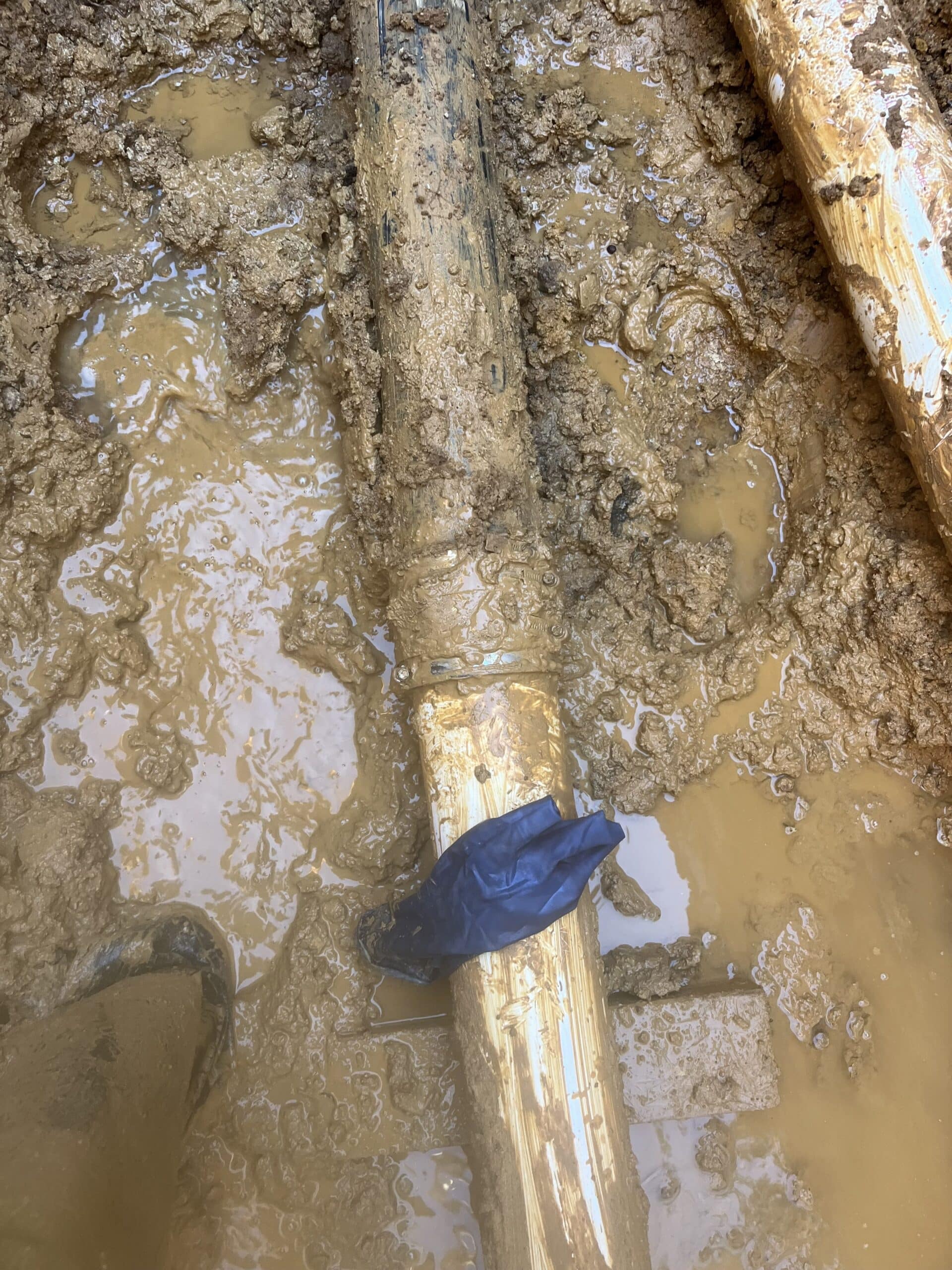
If you have a pre-1972 home in Northern Virginia and you haven’t had a sewer camera inspection, you don’t know what’s under your yard. That’s not meant to alarm you — it’s just the reality of owning an older home. A sewer camera inspection is the only way to determine whether your lateral line is Orangeburg, clay, cast iron, or PVC, and if it is Orangeburg, what condition it’s in.
What Is a Sewer Camera Inspection?
A sewer camera inspection (also called a sewer scope or camera scope) involves inserting a flexible waterproof camera into your sewer line through an access point — typically a cleanout or toilet connection — and running it through the line toward the municipal main. The camera transmits real-time video to a monitor so the technician can see the pipe material, interior condition, any damage, blockages, or root intrusion.
For Orangeburg pipe specifically, the camera reveals whether the pipe is still holding its round shape, whether it’s starting to deform (oval cross-section), whether there are cracks or separations at joints, and how much usable life — if any — remains.
How the Inspection Works
- Access: We locate your sewer cleanout — usually a 4″ capped pipe in the yard, basement, or near the foundation. If there’s no cleanout, we may need to pull a toilet to access the line (additional cost applies).
- Camera insertion: The camera is fed into the line and pushed toward the street.
- Live video: We watch the footage in real time and document what we find. Orangeburg, deformation, cracks, and roots are all visible on camera.
- Footage review: We walk you through what we found, show you the video, and explain our assessment in plain terms.
- Written report: We provide a summary of findings and — if replacement is needed — a quote for next steps.
What We’re Looking for in an Orangeburg Inspection
Not all Orangeburg is in the same condition. A camera inspection lets us assess where on the spectrum your pipe falls:
- Still round and flowing: The pipe is deteriorating but hasn’t deformed yet. Replacement can be planned on a timeline that works for you.
- Beginning to deform (oval): The pipe is softening and losing its shape. Root intrusion and blockages are increasingly likely. Replacement should be prioritized.
- Severely deformed or partially collapsed: Flow is restricted or completely blocked. This is a near-term or active failure — immediate attention is needed.
- Collapsed sections: Emergency replacement required.
Is the Inspection Really Free?
Yes — with one condition. We provide sewer camera inspections at no charge when we can access the line through an existing cleanout. If your home doesn’t have an accessible cleanout, there are two options:
- Toilet pull: We remove a toilet to access the line. This involves a service charge and the cost of a new wax ring.
- Cleanout installation: We install a cleanout so future inspections can be done for free. This is a one-time cost that pays for itself over time.
We’ll always tell you upfront if there’s a cost involved and why. No surprises.
When Should You Get an Inspection?
- Your home was built between 1945 and 1972 and you’ve never had a camera inspection
- You’re buying or selling a pre-1972 home
- You’ve had recurring slow drains or backups
- You’ve noticed wet spots or sinkholes in the yard
- Your plumber mentioned possible Orangeburg during a service call
- A neighbor had an Orangeburg failure or replacement
Schedule Your Free Inspection
Quality Sewer & Drain serves Fairfax County, Arlington, Alexandria, Prince William County, Loudoun County, and Montgomery County MD. Call (703) 686-7586 to schedule — most inspections can be booked within a few days.
