
Orangeburg Pipe Replacement
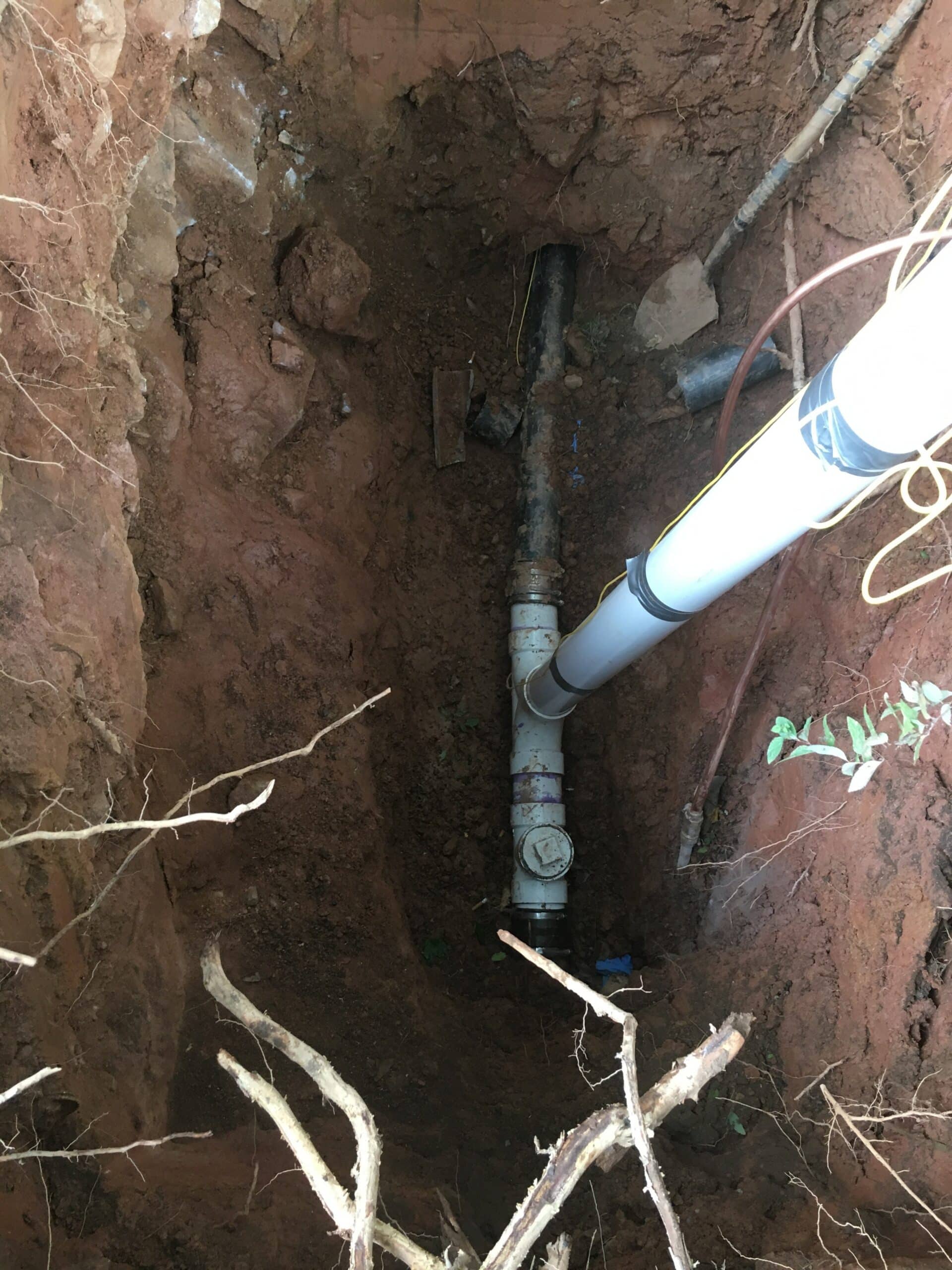
Orangeburg pipe doesn’t get better with time. Once it begins to deform, it will continue to deteriorate until it collapses or blocks entirely. The question isn’t whether to replace it — it’s when and how. This page covers the replacement methods available for Orangeburg sewer lines and how Quality Sewer & Drain approaches the work.
Replacement Methods for Orangeburg Pipe
There are two main approaches to replacing a failed or failing Orangeburg sewer line: traditional open-cut excavation and trenchless replacement. The right method depends on the location of the pipe, its depth, the condition of your yard, and your property layout.
Open-Cut Excavation (Traditional)
Open-cut excavation means digging up the yard along the sewer line route, removing the old pipe, and installing new PVC in the trench. It’s the most straightforward method and gives the crew direct visibility of the pipe throughout the replacement. The trench is typically 2–4 feet wide and 4–8 feet deep depending on how deep the line runs.
- Best for: Severely collapsed or damaged pipe that can’t be relined; long runs with multiple failures; pipe that is very shallow or very deep
- Yard impact: Moderate to significant — a trench is dug and then backfilled. Grass, landscaping, and hardscape along the route are disrupted.
- Duration: Typically 1–2 days depending on length and conditions
Pipe Bursting (Trenchless)
Pipe bursting is a trenchless method where a bursting head is pulled through the existing pipe, breaking it outward into the surrounding soil, while simultaneously pulling a new PVC pipe into place behind it. Only two small access pits are needed — one at each end of the run — rather than a full trench.
- Best for: Pipe that is still intact enough to guide the bursting head through; straight runs without major offsets
- Yard impact: Minimal — two small pits rather than a full trench
- Duration: Often completed in a single day
- Limitation: Cannot be used if the pipe has already fully collapsed or has severe offsets
CIPP Lining (Cured-in-Place Pipe)
CIPP lining inserts a resin-saturated liner into the existing pipe, which is then inflated and cured in place to form a smooth new pipe within the old one. It’s sometimes called “pipe within a pipe.” However, Orangeburg pipe is generally not a good candidate for CIPP lining — the pipe walls are too deteriorated and irregular to support the liner reliably. We typically don’t recommend CIPP for Orangeburg.
What Gets Replaced
A typical Orangeburg replacement covers the lateral sewer line — the pipe that runs from your home to the municipal main at the street. This is your pipe, on your property (and in some jurisdictions, extending to the main). The city’s main is not your responsibility.
Depending on the scope, the replacement may include:
- The full run from the house to the street (most common)
- A partial section if only part of the line has failed
- Cleanout installation if none exists (strongly recommended)
- Restoration of the yard, concrete, or hardscape that was disturbed
What to Expect During the Replacement
- Camera inspection first: We always start with a camera scope to confirm the extent of the damage and plan the most efficient replacement path.
- Permits: Most jurisdictions in Northern Virginia require a permit for sewer lateral work. We pull the permit.
- Utility locates: We call Miss Utility before any excavation.
- New pipe: We install Schedule 40 PVC, which carries a 50-year warranty and is the current industry standard.
- Inspection: In most jurisdictions, a county inspector signs off on the completed work.
- Backfill and restoration: We backfill the trench and restore the grade. We can also coordinate sod or concrete repair.
How Long Does It Take?
Most Orangeburg replacements are completed in one to two days. A 50–70 foot lateral with no complications is typically a one-day job. Longer runs, difficult access, or deep pipe can extend the timeline. We’ll give you a realistic schedule before we start.
Start With a Free Camera Inspection
If you think you have Orangeburg pipe, we’ll inspect it first at no charge — provided we can access it through a cleanout. The camera inspection tells us what method makes the most sense and gives us everything we need to provide an accurate quote. Call (703) 686-7586 or book online.
