
What Is Orangeburg Pipe?
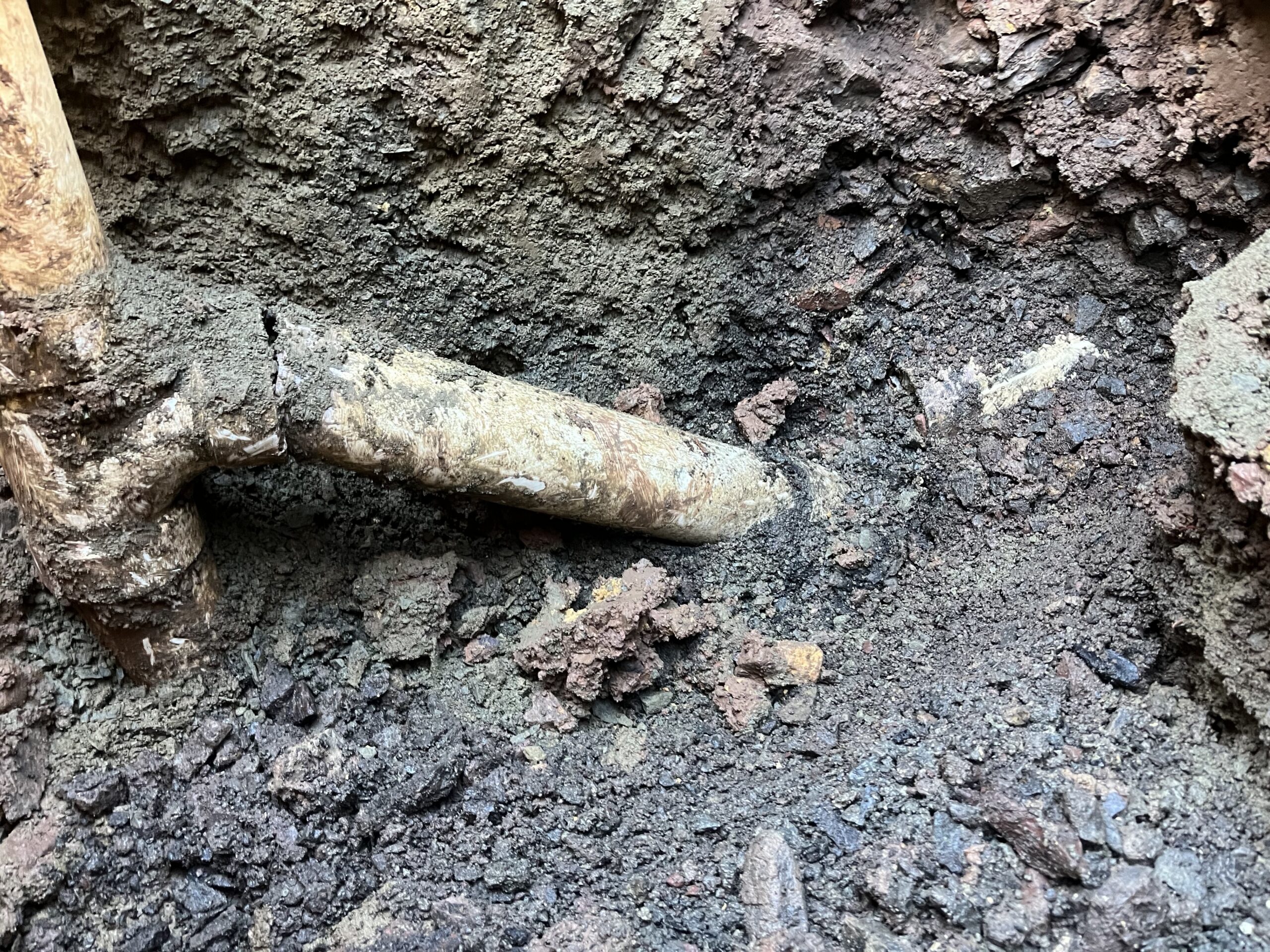
Orangeburg pipe is a type of sewer pipe made from layers of compressed wood pulp and pitch (tar). It was used widely in residential construction from the 1940s through the early 1970s — especially after World War II, when cast iron was expensive and in short supply. Millions of homes built during that era have Orangeburg sewer lines, and most of those pipes are now well past their intended service life.
Where Did It Come From?
The pipe gets its name from Orangeburg, New York, where the Fiber Conduit Company manufactured it starting in the 1860s. Originally designed for electrical conduit, it was repurposed for residential sewer lines during WWII when metal was rationed for the war effort. Builders adopted it quickly — it was cheap, lightweight, and easy to install. It was also marketed under names like “no-corrode pipe” and “fiber conduit,” names that turned out to be optimistic.
What’s the Problem With Orangeburg Pipe?
Orangeburg was only ever rated for a 50-year service life — under ideal conditions. The material is essentially compressed paper and tar. Over time, it deteriorates in predictable ways:
- It absorbs moisture from surrounding soil, softening the pipe walls
- It deforms from round to oval as it weakens under the weight of soil above it
- It collapses entirely as the walls fail, blocking sewage flow
- The layers delaminate and separate, creating rough interior surfaces that catch debris and cause recurring clogs
A pipe installed in 1960 is now more than 65 years old — well beyond its design life. Many are already failing. Others are in the process of failing but haven’t shown obvious symptoms yet.
Which Homes in Northern Virginia Have Orangeburg Pipe?
If your home was built between 1945 and 1972, there’s a real chance it has Orangeburg sewer pipe. This covers much of the post-war suburban development across the region, including neighborhoods in:
- Annandale, Springfield, and Bailey’s Crossroads
- Seven Corners and Falls Church
- Mount Vernon and Hybla Valley
- Parts of Alexandria City and Arlington
- Early sections of McLean, Herndon, and Reston
Not every home from this era has Orangeburg — some builders used clay pipe or early PVC — but it was common enough that the only way to know for certain is a sewer camera inspection.
What Does Orangeburg Pipe Look Like?
From the outside, Orangeburg is dark (black or very dark brown), lightweight for its size, and has a slightly rough or layered texture. When you knock on it, it sounds dull — not hollow like PVC or metallic like cast iron. In deteriorated sections it may feel soft, and the walls may be visibly deformed or crumbling.
That said, Orangeburg is buried underground and not accessible without excavation. You can’t identify it by looking at your cleanout or what’s visible in the basement. A sewer camera inspection is the only reliable method.
Warning Signs That Your Orangeburg May Be Failing
Some symptoms may suggest a failing sewer line. None are definitive on their own — they can have other causes — but these are worth paying attention to if your home was built before 1972:
- Slow-draining fixtures throughout the house (not just one drain)
- Recurring sewer backups or blockages that keep coming back after clearing
- Wet spots, soggy areas, or depressions in the yard over the sewer line
- Sewage odor in the yard
- Unusually lush or green grass in a strip along the sewer line route
What to Do If You Think You Have Orangeburg Pipe
Get a camera inspection. This is the only way to confirm the pipe material, assess its current condition, and understand how much service life — if any — remains. Orangeburg that’s still holding its round shape and draining well may last a few more years. Orangeburg that’s already deforming or partially collapsed needs to be addressed soon.
Quality Sewer & Drain offers free sewer camera inspections for homes where access is available through an existing cleanout. We’ll show you the footage, explain what we found, and give you an honest assessment — no upsell, no pressure.
Schedule a Free Camera Inspection
Serving Fairfax County, Arlington, Alexandria, Prince William County, Loudoun County, and Montgomery County MD. Call (703) 686-7586 or use the button below to schedule.
